AI for Sustainable Solutions in Energy, Water, and Environment is an interdisciplinary research cluster committed to advancing frontier artificial intelligence research in support of sustainable development. The cluster brings together expertise across engineering, environmental science, data science, and policy to develop innovative, AI-enabled approaches for intelligent energy systems, sustainable water resource management, and environmental monitoring. Through high-impact research, cross-sector collaboration, and responsible innovation, the cluster seeks to generate transformative knowledge and practical solutions that strengthen climate resilience, resource efficiency, and environmental sustainability at local and global scales.
The research interests of team members in the AI for Sustainable Solutions in Energy, Water, and Environment cluster typically encompass a broad interdisciplinary range of fields at the intersection of artificial intelligence, sustainability, and resource management. These include machine learning and data-driven modeling, intelligent energy systems, renewable energy integration, water resources management, environmental monitoring, climate resilience, remote sensing, optimization, and smart sensing technologies. Team members may also engage in research on digital twins, decision-support systems, sustainable infrastructure, and the policy and governance dimensions of responsible AI, with a shared focus on developing innovative solutions to pressing environmental and sustainability challenges.
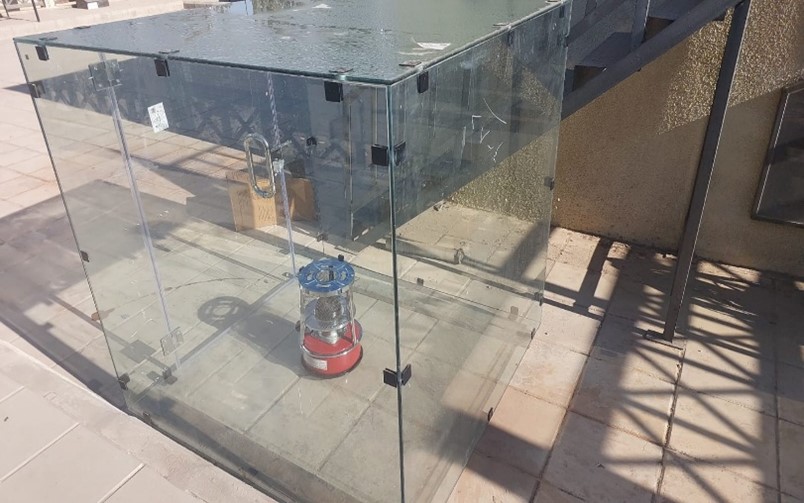
Objectives : This project aims to replace kerosene with biodiesel made from waste cooking oil and improve combustion efficiency using nanomaterial additives. The approach combines expertise from renewable energy, environmental science, and nanotechnology to tackle the dual challenges of sustainable fuel production and emissions reduction. Additionally, a transdisciplinary perspective is adopted by engaging stakeholders such as policymakers, industry representatives, and communities relying on kerosene heaters, ensuring the practical relevance and societal impact of the research findings.
Funding Agency: GYA (Arab–German Young Academy of Sciences and Humanities), which is closely related to the DAAD, though it is not directly part of it.

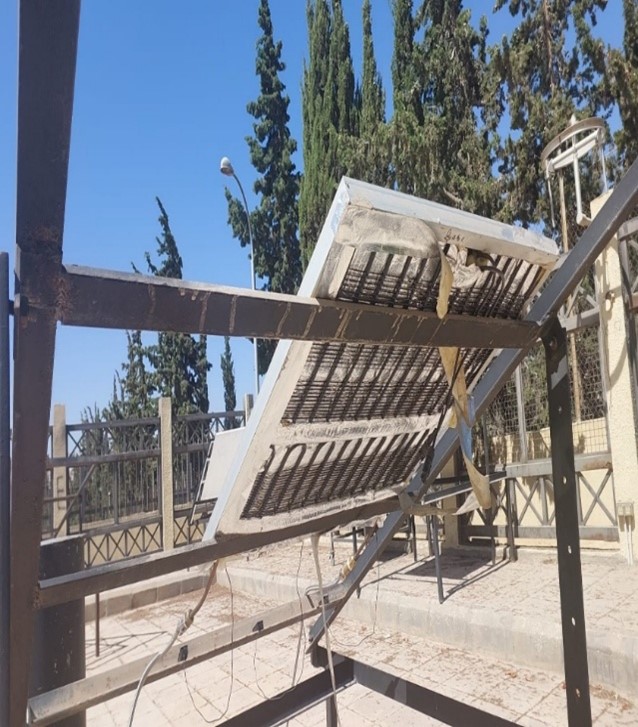
Photovoltaic (PV) systems are increasingly adopted as sustainable energy solutions; however, their efficiency is significantly hampered by environmental soiling factors such as dust, bird droppings, pollen, and other particulates. These contaminants accumulate on panel surfaces, obstructing sunlight and leading to notable declines in power output—sometimes up to 30% or more in heavily affected regions. Traditional manual cleaning methods are labor-intensive, costly, water-intensive, and often infrequent or poorly timed, especially in remote or large-scale installations. As the global demand for clean energy grows, there is a pressing need for intelligent, automated maintenance solutions that ensure consistent PV performance while minimizing operational costs and environmental impact. This proposal addresses that gap by developing an automated, on-demand cleaning system capable of detecting soiling or power loss and initiating cleaning cycles autonomously. The incorporation of Over-The-Air (OTA) control ensures remote management, configuration, and firmware updates, reducing the need for site visits. By focusing on low energy and water consumption, high reliability, and adaptability across diverse PV systems, this work presents a scalable, forward-looking solution to a key challenge in solar energy maintenance and performance optimization.
Funding Agency: Deanship of Academic Research and Graduate Studies (ASU)
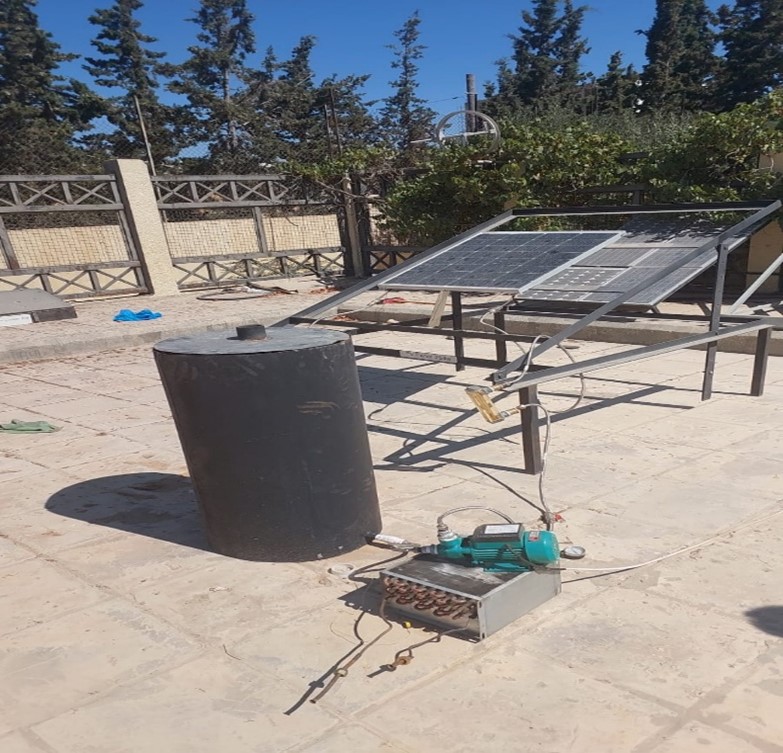
This project aims to overcome this challenge by leveraging mono and hybrid nanofluids as advanced cooling agents. By incorporating nanotechnology, these fluids offer superior thermal conductivity and heat dissipation, effectively mitigating the impact of overheating. This innovation will enhance energy conversion efficiency and ensure more reliable energy output under Jordan’s hot climatic conditions. As a result, it can contribute to the country’s growing renewable energy initiatives by optimizing solar energy systems and reducing dependency on fossil fuels.
Funding Agency: Deanship of Academic Research and Graduate Studies (ASU)


The pressure on freshwater resources is not only a local problem, but it also is a challenge around the world, and the main factor of this challenge is human activities, which include (urbanization, population growth, competition for water, exploitation, and pollution), these causes many variations on the natural process, leading to an imbalance in water demand and supply. The Middle East is dominated by an arid and semi-arid climate with a high population, therefore the water challenges are Pervasive in these countries, especially water scarcity and water Pollution.
Unfortunately, fresh water in Jordan is very scarce and the problem increases as the population increases. Several attempts have been made to produce drinking water, for example, desalination, but this demands high energy input. Therefore finding alternative energy efficient methods for enhancing the water quality is highly needed. Moreover, solar energy is a renewable source that is recommended to be used for contaminated Water disinfection instead of other conventional energy sources. Finally, in order to speed up the solar disinfection process, nanotechnology will be used.
Funding Agency: Isra University (appointed as a research team member)
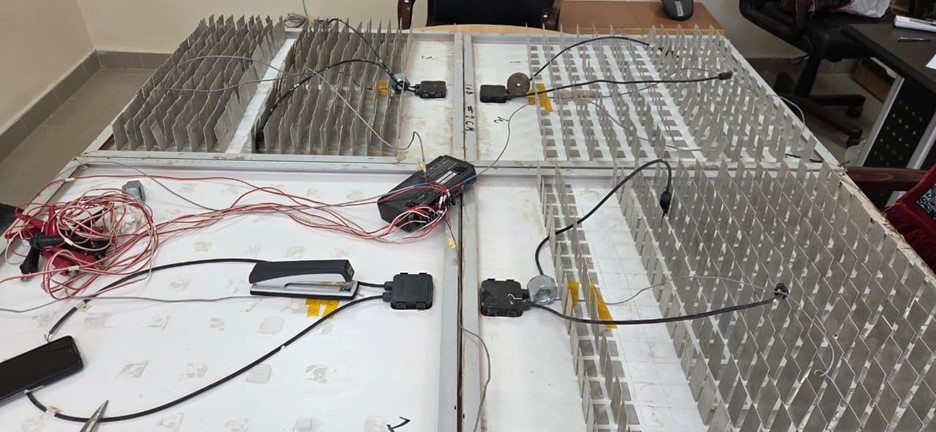
This research aims to enhance the electrical and thermal performance of photovoltaic (PV) modules by attaching nano-coated fins to their rear surface. The proposed fins are designed to improve heat dissipation by increasing the effective heat-transfer area, while the nanomaterial coating is expected to enhance thermal conductivity and surface heat-transfer characteristics. By reducing the operating temperature of the PV module, the proposed system may improve its electrical efficiency, power output, and long-term reliability. The study will experimentally evaluate the influence of the nano-coated fins on PV temperature, electrical performance, and overall energy efficiency under different environmental and operating conditions, with the results compared against those of a conventional unmodified PV module.

| Prof. Mohammad Ahmad Hamdan – Head of the group | https://www.asu.edu.jo/en/engineering/mo_ahmad/Pages/Personal-Information.aspx |
| Dr. Abdlerahman Radwan | https://www.asu.edu.jo/en/engineering/a_radwan/Pages/Personal-Information.aspx |
| Dr. Otabeh Al-Oran | https://www.asu.edu.jo/en/engineering/O_alouran/Pages/Personal-Information.aspx |
| Dr. Mohammad K.S Ma’aitah | https://www.asu.edu.jo/en/engineering/m_almaayta/Pages/Personal-Information.aspx |
| Dr. Amneh Shtaiwi | https://www.asu.edu.jo/en/Science/a_shtaiwi/Pages/Personal-Information.aspx |
| Prof. Ahmad sakhrieh |
| The American University of Ras Al Khaimah |
| https://aurak.ac.ae/faculty/prof-ahmad-sakhrieh |
| Dr. Abedelkader Helwan |
| Lebanese American University |
| https://gsr.lau.edu.lb/research/postdoctoral-research-fellow/dr_abedelkader_helwan.php |
| |
| Dr. Adel M.S. Juaidi |
| An Najah National University |
| https://staff.najah.edu/en/profiles/1374/ |
| |
| Mr. Mohammed Saleh Ahmed Shehadeh |
| Philadelphia Solar company |
| |
| Dr. Maher M. A. AL-Maghalseh |
| Palestine Polytechnic University |
| https://cet.ppu.edu/en/staff/dr-maher-m-al-maghalseh |
| |
| Eman Ahmad Muneer Abdelhafez |
| Al-Zaytoonah University of Jordan |
| https://www.zuj.edu.jo/AcademicProfile.aspx?key=AH13t64L31vDxGVUYbssBw== |